
В тази статия ще научим как да вмъкнем възел в кръгъл свързан списък. Вмъкването е основна операция в свързани списъци, която включва добавяне на нов възел към списъка. В кръгъл свързан списък последният възел се свързва обратно с първия възел, създавайки цикъл.
Има четири основни начина за добавяне на елементи:
- Вмъкване в празен списък
- Вмъкване в началото на списъка
- Вмъкване в края на списъка
- Вмъкване на конкретна позиция в списъка
Предимства от използването на показалеца на опашката вместо показалеца на главата
Трябва да обходим целия списък, за да вмъкнем възел в началото. Също така за вмъкване в края трябва да се премине през целия списък. Ако вместо на започнете указател вземаме указател към последния възел, тогава и в двата случая няма да има нужда да преминаваме през целия списък. Така че вмъкването в началото или в края отнема постоянно време, независимо от дължината на списъка.
javascript глобална променлива
1. Вмъкване в празен списък в кръговия свързан списък
За да вмъкнете възел в празен кръгъл свързан списък, създава a нов възел с дадените данни задава следващия си указател да сочи към себе си и актуализира последно указател към това нов възел .
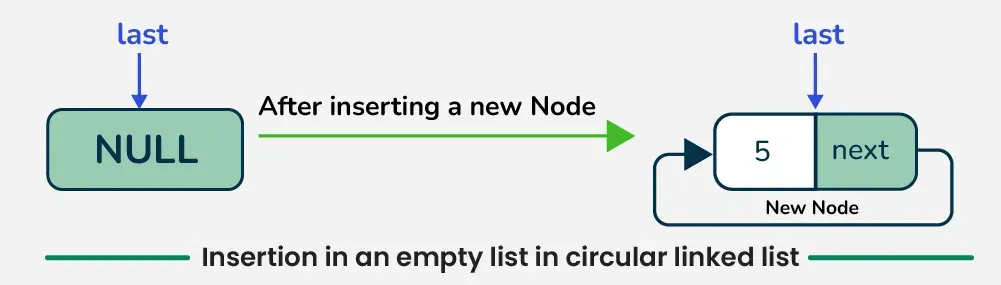 Вмъкване в празен списък
Подход стъпка по стъпка:
- Проверете дали последно не е nullptr . Ако вярно връщане последно (списъкът не е празен).
- В противен случай Създайте a нов възел с предоставените данни.
- Задайте нови възли следващ указател, който да сочи към себе си (кръгова връзка).
- Актуализация последно да посочи към нов възел и го върнете.
За да прочетете повече за вмъкването в празен списък, вижте: Вмъкване в празен списък в кръговия свързан списък
2. Вмъкване в началото на кръгъл свързан списък
За да вмъкнете нов възел в началото на кръгъл свързан списък
- Първо създаваме нов възел и разпределете памет за него.
- Ако списъкът е празен (обозначено с последния показалец, който е NULL ) ние правим нов възел сочи към себе си.
- Ако списъкът вече съдържа възли, тогава задаваме нови възли следващия указател, който да сочи към текуща глава от списъка (което е последно->следващо )
- След това актуализирайте следващия указател на последния възел, за да сочи към нов възел . Това поддържа кръговата структура на списъка.
 Вмъкване в началото на кръгъл свързан списък
 За да прочетете повече за вмъкването в началото, вижте: Вмъкване в началото на кръгъл свързан списък
3. Вмъкване в края на кръгъл свързан списък
За да вмъкнем нов възел в края на кръгъл свързан списък, първо създаваме новия възел и заделяме памет за него.
- Ако списъкът е празен (означава последно или опашка указател е NULL ) ние инициализираме списъка с нов възел и го насочва към себе си, за да образува кръгла структура.
- Ако списъкът вече съдържа възли, тогава задаваме нови възли следващия указател, който да сочи към текуща глава (което е опашка->следващ )
- След това актуализирайте текущи опашки следващия указател, който да сочи към нов възел .
- Най-накрая актуализираме показалец на опашката към нов възел.
- Това ще гарантира, че нов възел сега е последен възел в списъка при запазване на кръговата връзка.
 Вмъкване в края на кръгъл свързан списък
 За да прочетете повече за вмъкването в края, вижте: Вмъкване в края на кръгъл свързан списък
4. Вмъкване на конкретна позиция в кръгъл свързан списък
За да вмъкнем нов възел на конкретна позиция в кръгъл свързан списък, първо проверяваме дали списъкът е празен.
java ламбда изрази
- Ако е и на позиция не е 1 след това отпечатваме съобщение за грешка, защото позицията не съществува в списъка. аз
- е позиция е 1 след това създаваме нов възел и го накарайте да сочи към себе си.
- Ако списъкът не е празен, създаваме нов възел и преминете през списъка, за да намерите правилната точка на вмъкване.
- Ако позиция е 1 вмъкваме нов възел в началото, като регулирате съответно стрелките.
- За други позиции преминаваме през списъка, докато достигнем желаната позиция и вмъкваме нов възел чрез актуализиране на указателите.
- Ако новият възел е вмъкнат в края, ние също актуализираме последно указател за препратка към новия възел, поддържайки кръговата структура на списъка.
 Вмъкване на конкретна позиция в кръгъл свързан списък
Подход стъпка по стъпка:
- Ако последно е nullptr и поз не е 1 печат ' Невалидна позиция! '.
- В противен случай Създайте нов възел с дадени данни.
- Вмъкване в началото: Ако pos е 1 актуализирайте указателите и се върнете последни.
- Траверсен списък: Цикъл за намиране на точката на вмъкване; print 'Невалидна позиция!' ако е извън границите.
- Вмъкване на възел: Актуализирайте указателите, за да вмъкнете новия възел.
- Последна актуализация: Ако се постави в края на актуализацията последно .
#include
#include
class Node { int data; Node next; Node(int value){ data = value; next = null; } } public class GFG { // Function to insert a node at a specific position in a // circular linked list static Node insertAtPosition(Node last int data int pos){ if (last == null) { // If the list is empty if (pos != 1) { System.out.println('Invalid position!'); return last; } // Create a new node and make it point to itself Node newNode = new Node(data); last = newNode; last.next = last; return last; } // Create a new node with the given data Node newNode = new Node(data); // curr will point to head initially Node curr = last.next; if (pos == 1) { // Insert at the beginning newNode.next = curr; last.next = newNode; return last; } // Traverse the list to find the insertion point for (int i = 1; i < pos - 1; ++i) { curr = curr.next; // If position is out of bounds if (curr == last.next) { System.out.println('Invalid position!'); return last; } } // Insert the new node at the desired position newNode.next = curr.next; curr.next = newNode; // Update last if the new node is inserted at the // end if (curr == last) last = newNode; return last; } static void printList(Node last){ if (last == null) return; Node head = last.next; while (true) { System.out.print(head.data + ' '); head = head.next; if (head == last.next) break; } System.out.println(); } public static void main(String[] args) { // Create circular linked list: 2 3 4 Node first = new Node(2); first.next = new Node(3); first.next.next = new Node(4); Node last = first.next.next; last.next = first; System.out.print('Original list: '); printList(last); // Insert elements at specific positions int data = 5 pos = 2; last = insertAtPosition(last data pos); System.out.print('List after insertions: '); printList(last); } }
class Node: def __init__(self value): self.data = value self.next = None # Function to insert a node at a specific position in a circular linked list def insertAtPosition(last data pos): if last is None: # If the list is empty if pos != 1: print('Invalid position!') return last # Create a new node and make it point to itself new_node = Node(data) last = new_node last.next = last return last # Create a new node with the given data new_node = Node(data) # curr will point to head initially curr = last.next if pos == 1: # Insert at the beginning new_node.next = curr last.next = new_node return last # Traverse the list to find the insertion point for i in range(1 pos - 1): curr = curr.next # If position is out of bounds if curr == last.next: print('Invalid position!') return last # Insert the new node at the desired position new_node.next = curr.next curr.next = new_node # Update last if the new node is inserted at the end if curr == last: last = new_node return last # Function to print the circular linked list def print_list(last): if last is None: return head = last.next while True: print(head.data end=' ') head = head.next if head == last.next: break print() if __name__ == '__main__': # Create circular linked list: 2 3 4 first = Node(2) first.next = Node(3) first.next.next = Node(4) last = first.next.next last.next = first print('Original list: ' end='') print_list(last) # Insert elements at specific positions data = 5 pos = 2 last = insertAtPosition(last data pos) print('List after insertions: ' end='') print_list(last)
class Node { constructor(value){ this.data = value; this.next = null; } } // Function to insert a node at a specific position in a // circular linked list function insertAtPosition(last data pos) { if (last === null) { // If the list is empty if (pos !== 1) { console.log('Invalid position!'); return last; } // Create a new node and make it point to itself let newNode = new Node(data); last = newNode; last.next = last; return last; } // Create a new node with the given data let newNode = new Node(data); // curr will point to head initially let curr = last.next; if (pos === 1) { // Insert at the beginning newNode.next = curr; last.next = newNode; return last; } // Traverse the list to find the insertion point for (let i = 1; i < pos - 1; ++i) { curr = curr.next; // If position is out of bounds if (curr === last.next) { console.log('Invalid position!'); return last; } } // Insert the new node at the desired position newNode.next = curr.next; curr.next = newNode; // Update last if the new node is inserted at the end if (curr === last) last = newNode; return last; } // Function to print the circular linked list function printList(last){ if (last === null) return; let head = last.next; while (true) { console.log(head.data + ' '); head = head.next; if (head === last.next) break; } console.log(); } // Create circular linked list: 2 3 4 let first = new Node(2); first.next = new Node(3); first.next.next = new Node(4); let last = first.next.next; last.next = first; console.log('Original list: '); printList(last); // Insert elements at specific positions let data = 5; let pos = 2; last = insertAtPosition(last data pos); console.log('List after insertions: '); printList(last);
Изход
Original list: 2 3 4 List after insertions: 2 5 3 4
Времева сложност: O(n) трябва да преминем през списъка, за да намерим конкретната позиция.
Помощно пространство: О(1)